

Modern Technology for Optimal Diagnosis and Care
Modern technology can be a valuable addition to veterinary examinations and treatment. Today, we would like to introduce three technologies that we use in our practice. They help us assess heart murmurs more accurately, support skin regeneration and improve the care of certain wounds following surgery.
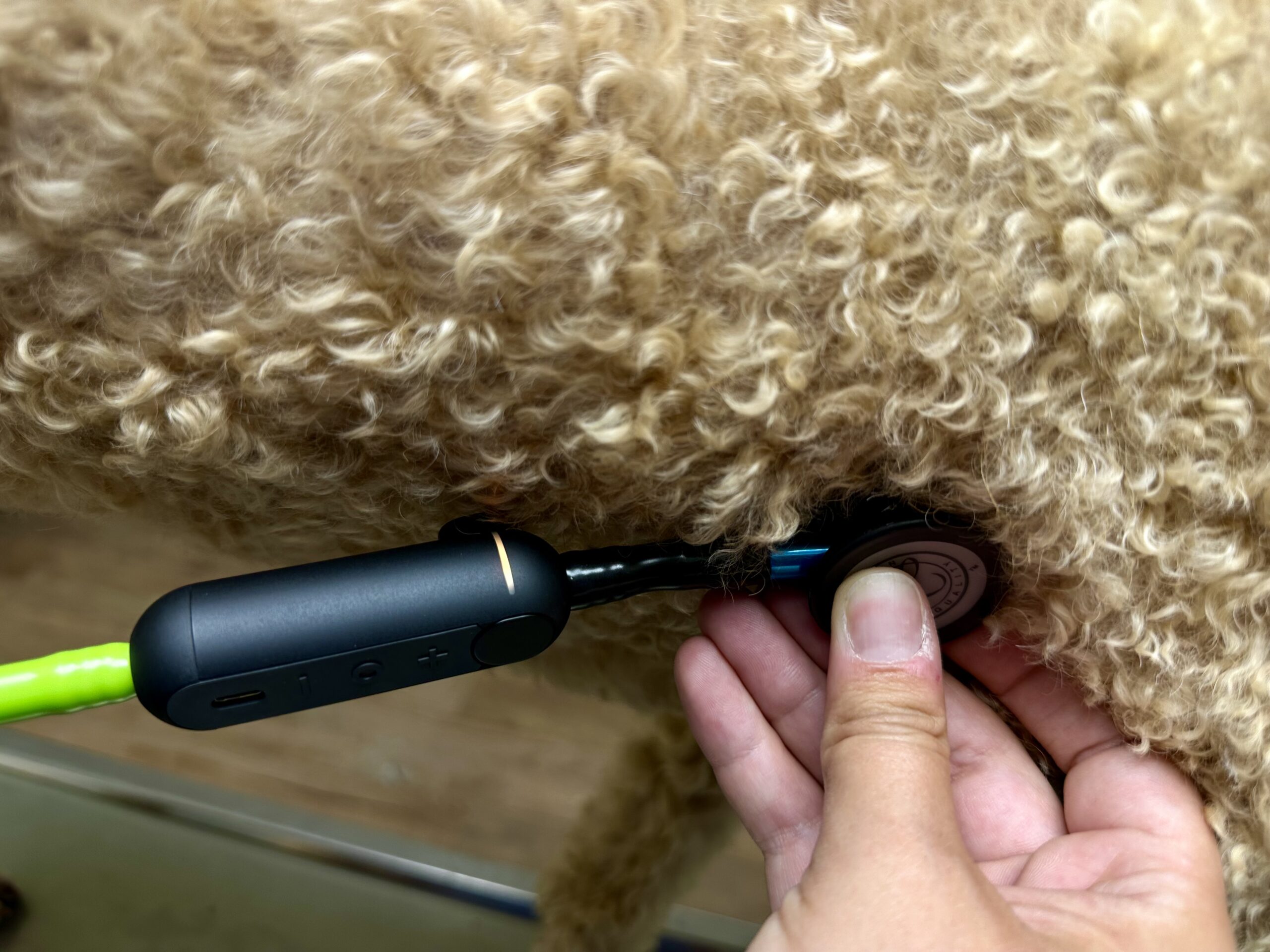
Digital Stethoscope
In certain cases, we use a digital “extension” of the traditional stethoscope. It amplifies heart sounds and also displays them in an app. Combined with specialised algorithms, the system can identify abnormal heart sounds or patterns that may indicate underlying heart disease.
At the same time, AI can help us distinguish potentially harmless sounds more accurately and may help avoid unnecessary further examinations. This is particularly useful when heart murmurs are very faint or difficult to assess.
However, the AI does not provide a definitive diagnosis. Its findings are always evaluated in combination with the clinical examination and our many years of veterinary experience.
PHOVIA
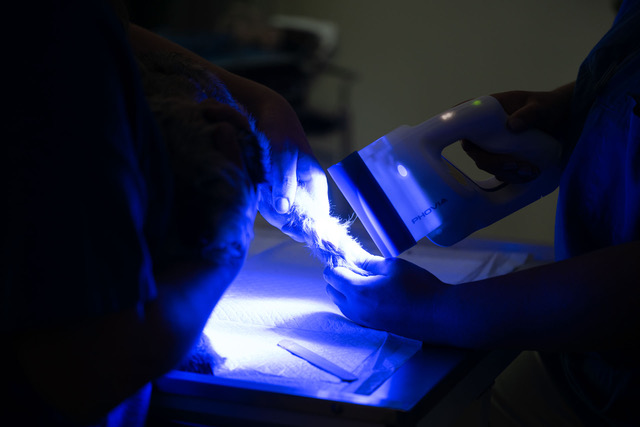
For certain skin conditions, we use PHOVIA, a light therapy system designed to support the skin’s natural regenerative processes.
A special gel is illuminated with blue LED light, producing fluorescent light at different wavelengths. This light reaches different layers of the skin, where it can stimulate regenerative processes.
The treatment is applied locally, requires no anaesthesia or invasive procedure, and is individually adapted to the condition of the affected skin.
For many of our patients, PHOVIA is a well-tolerated addition to their treatment. The affected area is usually treated once or twice a week.
Cold plasma
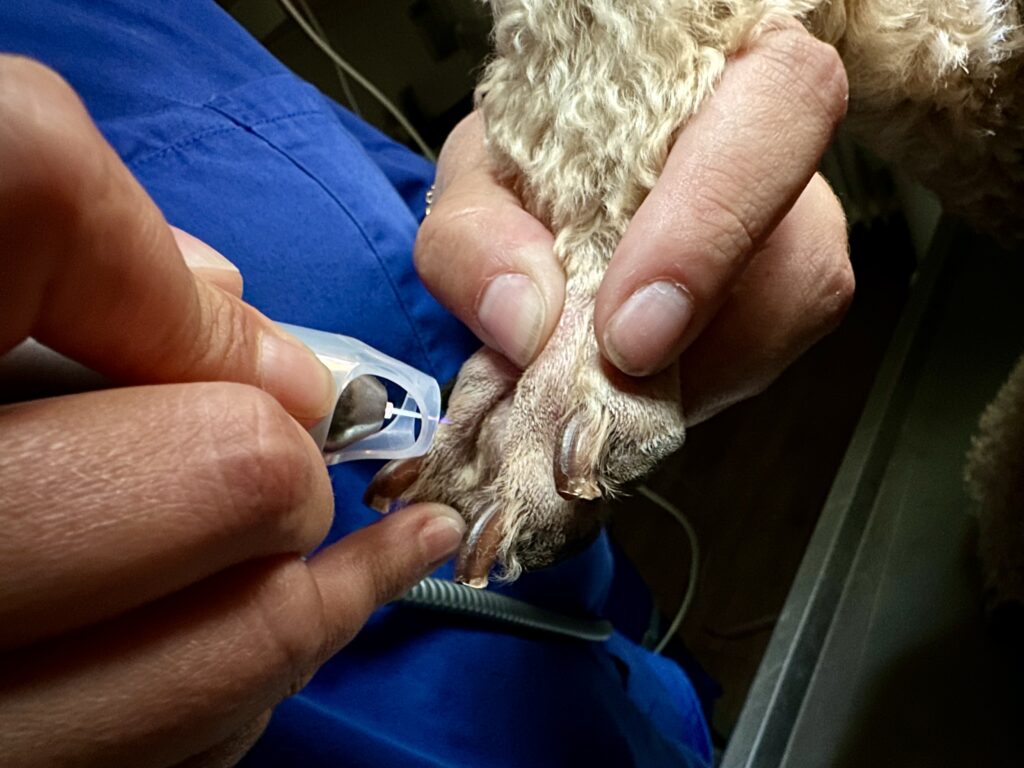
Following surgery, we use cold plasma as an additional option in postoperative wound care.
This physical therapy has antimicrobial properties and may also be effective against multidrug-resistant microorganisms. At the same time, it can support processes involved in wound healing. Because cold plasma works at tissue-friendly temperatures, it can be applied without exposing the surrounding tissue to damaging heat.
The treatment can be particularly useful for surgical wounds with an increased risk of infection or delayed healing, where it may support tissue regeneration and complement conventional wound care. Application is contact-free and causes little to no discomfort.
All of these technologies have one goal: to expand the options available to us and help reduce the need for antibiotics, while never replacing experience or a thorough diagnosis. We always decide which treatment is appropriate for your pet on an individual basis, taking into account the clinical findings and the course of the condition.
Because your pet’s health matters to us!